Information Sheet on “La Ruota” (Malta)
1. General Description:
• The building, located on Hospital Street in Rabat (Malta), now houses the National Archives of Malta. Previously, it served as a hospital.
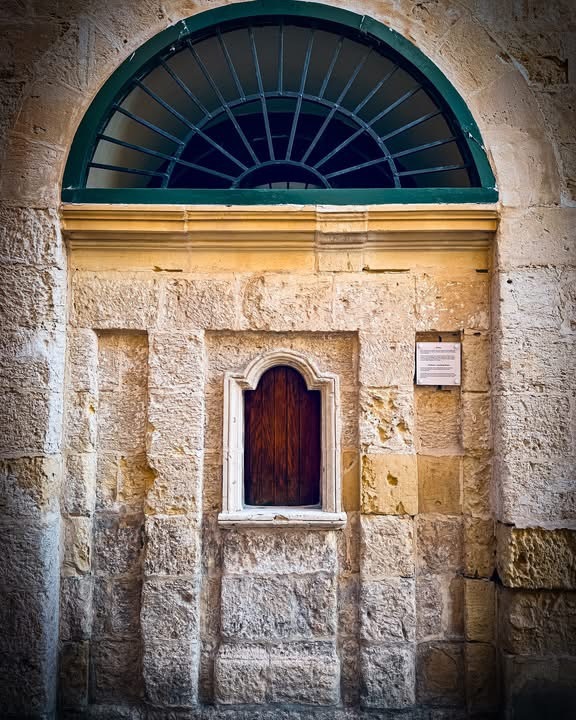
• A distinctive feature of the building’s façade is a structure known as “la ruota” (the wheel). It was a rotating mechanism designed to allow unwanted babies to be left anonymously.
2. Historical Context:
• The hospital, named after St. Francis, has been in operation since 1372 and is one of Malta’s earliest medical institutions. Its funding was provided by the Church.
• In 1433, the hospital’s administration was transferred to the local municipality, becoming known as the Santo Spirito Hospital. Its primary focus was providing care for the poor, as well as looking after foundlings and pregnant women.
3. The “La Ruota” Mechanism:
• First recorded in 1615, the “ruota” consisted of a narrow window with a rotating wooden cot where babies could be placed anonymously. When turned, it rang a bell, alerting the hospital staff to a new arrival.
• Babies left through this system were taken under the care of the hospital.
4. Social Significance:
• In Malta, where prostitution was widespread, children born out of wedlock were considered a source of shame. “La ruota” provided a solution for unwanted pregnancies, allowing mothers to avoid social stigma.
• By the 19th century, societal attitudes shifted, and the mechanism was discontinued. Foundlings were then left at churches or placed in orphanages.
5. The Fate of the Children:
• In the hospital, foundlings were cared for by specially trained nurses. By the age of 8, children were transferred to Fort Ricasoli. At 16, boys were apprenticed to craftsmen, while girls were taught handicrafts until the age of 20.
1. General Description:
• The building, located on Hospital Street in Rabat (Malta), now houses the National Archives of Malta. Previously, it served as a hospital.
• A distinctive feature of the building’s façade is a structure known as “la ruota” (the wheel). It was a rotating mechanism designed to allow unwanted babies to be left anonymously.
2. Historical Context:
• The hospital, named after St. Francis, has been in operation since 1372 and is one of Malta’s earliest medical institutions. Its funding was provided by the Church.
• In 1433, the hospital’s administration was transferred to the local municipality, becoming known as the Santo Spirito Hospital. Its primary focus was providing care for the poor, as well as looking after foundlings and pregnant women.
3. The “La Ruota” Mechanism:
• First recorded in 1615, the “ruota” consisted of a narrow window with a rotating wooden cot where babies could be placed anonymously. When turned, it rang a bell, alerting the hospital staff to a new arrival.
• Babies left through this system were taken under the care of the hospital.
4. Social Significance:
• In Malta, where prostitution was widespread, children born out of wedlock were considered a source of shame. “La ruota” provided a solution for unwanted pregnancies, allowing mothers to avoid social stigma.
• By the 19th century, societal attitudes shifted, and the mechanism was discontinued. Foundlings were then left at churches or placed in orphanages.
5. The Fate of the Children:
• In the hospital, foundlings were cared for by specially trained nurses. By the age of 8, children were transferred to Fort Ricasoli. At 16, boys were apprenticed to craftsmen, while girls were taught handicrafts until the age of 20.